Service Hotline : 0757-22332275
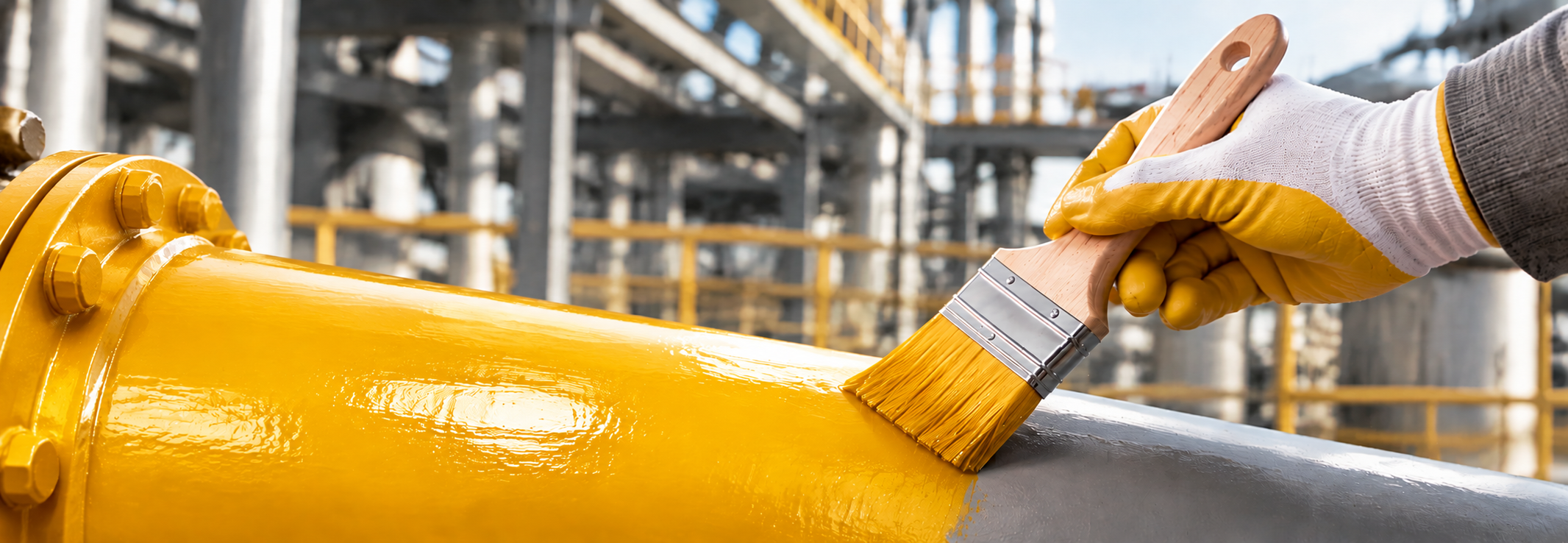
As waterborne coating technology continues to advance, polymer emulsions are expected to deliver more than basic film-forming properties. Early water resistance, adhesion to metal substrates, and corrosion protection have become increasingly important performance requirements.
In industrial and protective coatings, premature exposure to water can cause coating defects such as whitening, blistering, and surface deterioration. These challenges highlight the importance of developing polymer emulsions that support both coating appearance and protective performance.
At the same time, particle size control, polymerization process management, and the emulsification requirements of different resin systems place greater demands on emulsion polymerization technology.
Selecting the right anionic emulsifier is therefore essential not only for polymer emulsion production but also for achieving the desired performance in finished waterborne coatings.
ABEX WR 45 is an APE-free anionic sulfate emulsifier designed for use as a primary emulsifier in various emulsion polymerization systems.
It supports monomer pre-emulsification, latex particle size control, and polymerization process management. Beyond its role in polymer emulsion production, ABEX WR 45 is particularly suited to applications where early water resistance and protective coating performance are important.
ABEX WR 45 can be used in several polymer emulsion systems, including:
· Styrene-Acrylic Emulsions
· Vinyl-Acrylic Emulsions
· Styrene-Butadiene Emulsions
· Pure Acrylic Emulsions
With its emulsification and particle size control properties, ABEX WR 45 provides a versatile emulsification solution for waterborne polymer emulsions and industrial coating applications.
ABEX WR 45 serves as a primary emulsifier in various monomer systems, supporting monomer pre-emulsification, latex particle formation, and polymerization process control. It is suitable for the production of styrene-acrylic, pure acrylic, vinyl-acrylic, and styrene-butadiene emulsions.
Used in polymer emulsion systems for waterborne industrial coatings, particularly where early water resistance, adhesion to metal substrates, and protective coating performance are key considerations.
Suitable for waterborne direct-to-metal (DTM) coatings, where the coating is applied directly to metal substrates. It supports coating systems designed to deliver early water resistance, surface appearance recovery, and metal protection.
Applicable to waterborne protective coating formulations containing anticorrosive pigments, supporting the development of coatings that require good adhesion and corrosion resistance on metal substrates.
Particle size control is an important aspect of emulsion polymerization, as latex particle characteristics can influence polymerization behavior and the performance of finished coating formulations.
ABEX WR 45 offers excellent latex particle size control, helping produce fine polymer emulsion particles while supporting effective polymerization process management.
This makes it a valuable emulsifier for waterborne polymer systems where controlled latex particle characteristics are essential.
Early exposure to moisture can cause whitening, blistering, and other surface defects in waterborne coatings, particularly before the coating film has fully developed its protective properties.
One of the key advantages of ABEX WR 45 is its excellent early water resistance in direct-to-metal coating applications.
It helps improve coating performance during early water exposure, reducing the risk of visible blistering and rust formation while supporting the initial protective properties of waterborne metal coatings.
In addition to resistance during initial water contact, the ability of a coating film to recover its appearance after moisture exposure is an important performance consideration.
ABEX WR 45 demonstrates good film recovery after water exposure in waterborne coating applications.
Coating systems incorporating this emulsifier have shown good surface recovery, with no significant water whitening, blistering, or rust formation after recovery under the evaluated conditions.
This characteristic helps maintain the appearance of waterborne metal coatings during the early stages of service.
Metal substrates are vulnerable to moisture and environmental exposure, making adhesion and corrosion resistance essential properties of industrial protective coatings.
In waterborne DTM coating formulations, ABEX WR 45 supports coating systems with good corrosion resistance and adhesion to metal substrates.
When incorporated into formulations containing anticorrosive pigments, the resulting coatings have demonstrated favorable protective performance, making ABEX® WR 45 a suitable choice for waterborne metal protection applications.
In coatings with higher pigment volume concentration (PVC), increasing pigment and filler levels places additional demands on the overall formulation.
ABEX WR 45 is suitable for high-PVC waterborne coating systems and has been used in direct-to-metal coating formulations containing elevated pigment and filler levels.
This application capability provides an emulsification option for developing waterborne coatings that balance pigment loading, early water resistance, and metal protection.
Developing waterborne polymer emulsions and industrial coatings requires an integrated approach involving monomer selection, polymerization processes, and final coating formulation design.
ABEX WR 45 can be incorporated into different stages of this development process, providing practical emulsification solutions for both polymer emulsion production and waterborne protective coatings.
ABEX WR 45 can be used in the emulsion polymerization of various monomer combinations, including systems based on styrene-acrylic, vinyl-acrylic, styrene-butadiene, and pure acrylic polymers.
For waterborne DTM coating applications, relevant polymerization systems may incorporate monomers such as methacrylic acid (MAA), styrene, butyl methacrylate (BMA), methyl methacrylate (MMA), and 2-ethylhexyl acrylate (2-EHA).
These monomer combinations provide different options for developing waterborne polymer emulsions intended for industrial coating applications.
The addition method and distribution of an emulsifier are important considerations in emulsion polymerization process design.
ABEX WR 45 can be introduced through both the reactor phase and the monomer phase, allowing its use in polymerization processes involving monomer pre-emulsification.
For waterborne DTM coating emulsions, a combined approach using emulsifier addition to the reactor and monomer phase provides a practical option for incorporating ABEX WR 45 into the polymerization process.
For direct application to metal substrates, ABEX WR 45 can be incorporated into the polymer emulsion used in high-PVC waterborne DTM coating formulations.
These coating systems may combine polymer binders with ingredients such as titanium dioxide, talc, and anticorrosive pigments, followed by pigment dispersion and coating formulation adjustment.
This approach integrates emulsion polymerization with pigment and filler formulation design, providing a practical development route for waterborne direct-to-metal protective coatings.
In the development of waterborne polymer emulsions and industrial coatings, emulsifier selection influences not only the polymerization process but also the performance characteristics of the finished coating.
As an APE-free anionic sulfate emulsifier, ABEX WR 45 offers excellent latex particle size control and demonstrates valuable performance characteristics in waterborne DTM coatings, particularly in early water resistance, film recovery after water exposure, and metal coating protection.
Its application across styrene-acrylic, vinyl-acrylic, styrene-butadiene, and pure acrylic emulsion systems makes it a versatile choice for different waterborne polymer formulations.
For manufacturers focusing on emulsion polymerization, early water resistance, high-PVC coating formulations, and metal protection, ABEX WR 45 offers an effective emulsification option for developing high-performance waterborne industrial coatings.



NMT@fszhaojing.com
0757-22332275
Unit 3011, 30th Floor, Building 1, Poly Commercial Center, No. 3 Guotai South Road, Daliang Street, Shunde District, Foshan City, Guangdong Province


NMT@fszhaojing.com
0757-22332275
Unit 3011, 30th Floor, Building 1, Poly Commercial Center, No. 3 Guotai South Road, Daliang Street, Shunde District, Foshan City, Guangdong Province


 SA
 ES
 FR